click here for english review
Genre: Progressive Melodic Doom Metal
Release: 09.01.2026
Label: independent
𝐎𝐑𝐂𝐇𝐈𝐃 𝐓𝐇𝐑𝐎𝐍𝐄 ist eines dieser unglaublichen One-Man-Army Projekte. Das sind Multi-Instrumentalisten, welche einfach alle Instrumente selber einspielen. Nicholas Bonsanto aus Baltimore ist so ein Multitalent und wird nun am Anfang des Jahres 2026 sein Melodic-Doom-Metal-Album 𝘽𝙪𝙧𝙞𝙚𝙙 𝙄𝙣 𝘽𝙡𝙖𝙘𝙠 der Welt präsentieren. Das Album ist eine Verarbeitung persönlicher Gefühle und Erfahrungen und komplex aufgebaut.
Obwohl es sich nicht um ein Konzeptalbum handelt, verwebt 𝘽𝙪𝙧𝙞𝙚𝙙 𝙞𝙣 𝘽𝙡𝙖𝙘𝙠 in den Lyrics Themen wie Angst, Depression, Todesangst und die Suche nach dem Sinn des Lebens. Der Titel beschreibt sowohl die Musik selbst als auch die Gefühle, die Bonsanto seit Jahren in sich trägt.
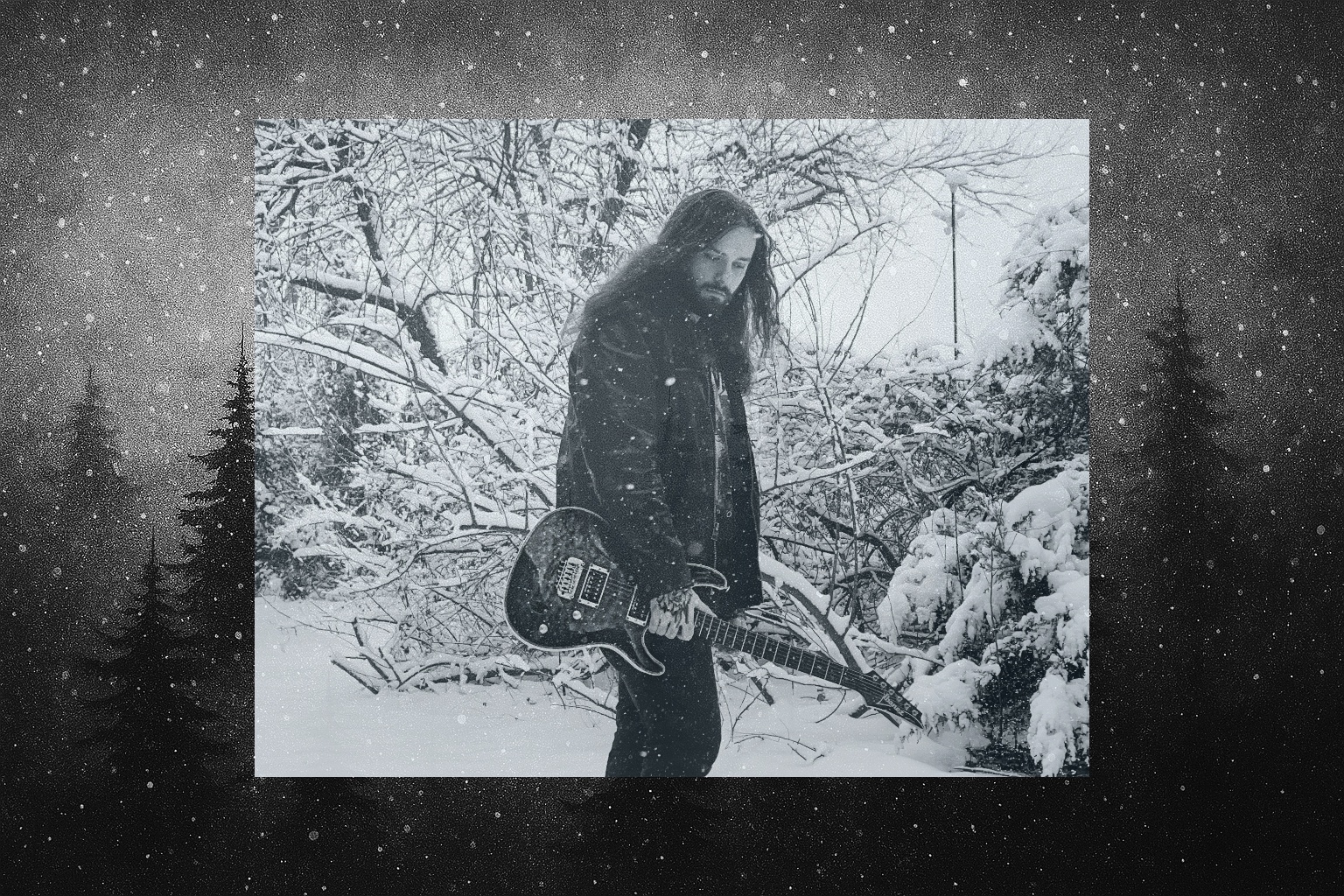
Wenn man sich die Pressefotos betrachtet, so sind es nicht nur Fotos, sondern stehen für die Themen des Albums. Es fällt auf, dass das Titelbild sehr kalt und trostlos wirkt, wogegen die anderen Bilder im Grünen mehr Leben ausstrahlen. Ich wage für mich mal eine Art der Interpretation: Das Bild in der Winterlandschaft steht für die dunklen, kalten Zeiten im Leben, vielleicht auch in einem Gefängnis der Depression und anderer schlechter Gedanken, einer Zeit, in der die Seele unter kaltem Schnee begraben oder gar im Eis gefroren ist. Die Gitarre bzw. die Musik ist dabei etwas, was einen begleitet, was man festhalten kann und was einem Halt gibt.
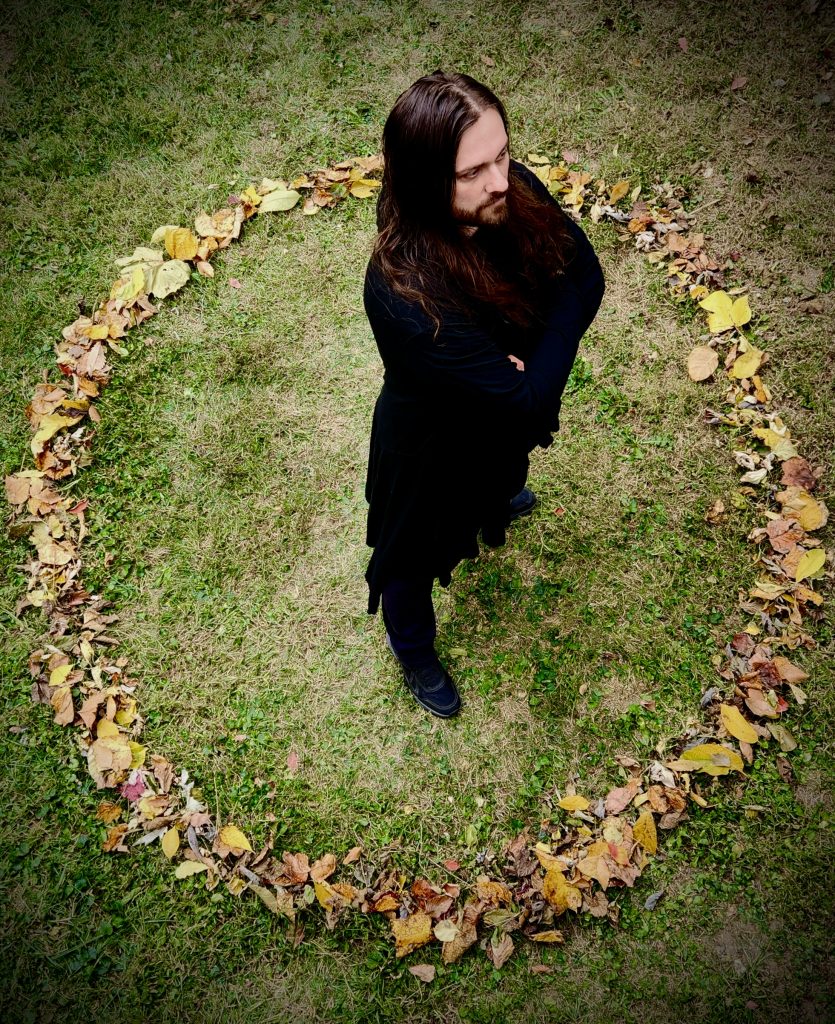
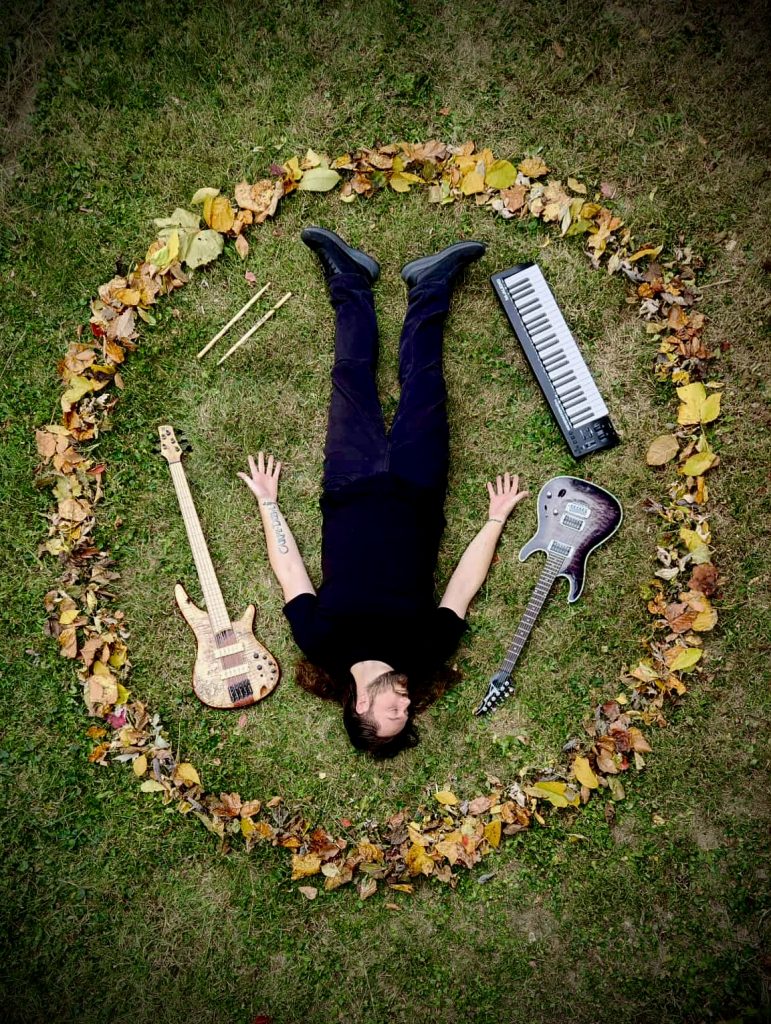
Die Fotos auf dem grünen Rasen zeigen einen anderen Aspekt. Den Ring aus Blättern bewerte ich als Kreislauf des Lebens und speziell in den gefallenen Blättern, aus denen der Ring besteht, sehe ich die Vergänglichkeit des Lebens. Nichts ist für die Ewigkeit, außer die Vergänglichkeit selbst. Alles vergeht irgendwann und entsteht wieder neu. Und der Mensch steht mittendrin und ist Teil dieses Kreislaufs. So viel zu meinen Gedanken…Jetzt aber zum Album
BURIED IN BLACK.
Der Opener „Dreamworld“ ist der größte Brocken des Albums mit einer Spielzeit von über 13 Minuten. Was für eine Herausforderung! Die Reise beginnt mit Pianoklängen, die wie Regen auf den Boden fallen. Dazu donnern die Drums und die Riffs sorgen für eine leicht mit Anspannung geladene Atmosphäre. Der Gesang ist zunächst mehr klangmalerisches Beiwerk im Hintergrund. So schreitet der Song erst einmal gemächlich voran und entfacht eine Art hypnotischen Sog, der den Hörer ins Geschehen reinzieht. Der Gesang im Hintergrund wandelt sich und wird düsterer und man erwartet schon den eruptiven Ausbruch im Song.
Doch dann folgt zu meiner Überraschung eine bedächtige Passage mit cleanen Gesängen, die jetzt mehr in den Vordergrund rücken und allein vom Piano begleitet werden. Dies hat etwas von Trübsal, Traurigkeit und Verletzlichkeit. Momente später höre ich aufkommende stürmische Winde, die dann aber vehement die verletzliche Ruhe hinwegfegen und zu einem wütenden Tornado werden, der einen hinab in die Dunkelheit reißt. Die Vocals wandeln sich zu brutalen Growls. Im folgenden kann ich den erneuten Wechsel zu den cleanen Vocal-Passagen mit Synthies im Hintergrund nicht ganz nachvollziehen, aber das hält nur kurz an, denn dann geht die brutale wilde Höllenfahrt erst richtig los.
Die Musik ist progressiv aufgebaut und die Stimmungen wechseln immer wieder. Im Gesamtbild kann ich persönlich zwar nicht immer jeden Schritt im musikalischen Aufbau von „Dreamworld“ vollkommen nachvollziehen, aber darüber kann ich hinwegsehen, denn insgesamt ist „Dreamworld“ wirklich gelungen und verfehlt seine Wirkung nicht. Gelungen finde ich, dass am Ende das Piano wieder Einzug erhält und den Kreis sozusagen schließt.
Gesanglich muss ich sagen, dass mir die extremen Vocals besser gefallen als die cleanen Vocals. Die cleanen Vocals sind schon okay und zweckdienlich, aber da wäre sicherlich noch Luft nach oben. Dies fällt mir beim Song „Ephemerality“ auf, der in den ersten Minuten balladesk klingt und der Gesang sich in der gefühlvollen Aura bewegt. Die Stimmung kommt gut rüber, aber da wäre noch mehr emotionaler Ausdruck möglich. Die extremen Vocals dagegen sind einwandfrei, was man bei diesem Song ebenso feststellen kann. „Ephemerality“ könnte man glatt als Doom-Ballade bezeichnen, wenn da nicht die Black-Metal-Raserei wäre, die im Song plötzlich wütet. Krasser Bruch im Song, der den Hörer mächtig herausfordert. In den ruhigeren Passagen sagt mir das gefühlvolle warme Bassspiel sehr zu.
Nicholas Bonsanto legt also viel Wert auf atmosphärische Stimmungen, die auch mal brutal herausfordernd sein können. Dazu zählt ebenfalls „Guilt“: ein zartes Pflänzchen, dass zunächst scheu und ängstlich erscheint, aber bei der Hälfte mit Kraft aus dem Boden schießt, um ein episches aufbäumendes Gitarrensolo abzufeuern. Anschließend kehrt man in den melancholischen Balladenmodus zurück. Nicholas ist aber ebenso in der Lage Song fließen zu lassen, wie z.B. beim Song „Moonlight Revelry“, der zudem noch eine neue Facette offenbart.
Schamanische oder auch folkloristische Klänge ertönen und leiten den Song „Moonlight Revelry“ ein. Im Anschluss dröhnen wuchtige Drums und melodische Riffs sorgen für einen epischen Touch. Das klingt echt gut. Ansonsten gibt es keine krassen Brüche im Song, so dass der Song schön harmonisch dahinfließen kann, auch wenn der Song natürlich wieder mit verschiedenen Stimmungen spielt. Grundsätzlich ist „Moonlight Revelry“ nicht so düster beklemmend wie die anderen Songs auf dem Album. Dieser Song ist eines meiner Highlights auf dem Album.
Bevor es zum großen Finale kommt, lässt der Instrumentaltrack „Breath Of Autumn“ sogar noch einmal folkloristische naturverbundene Vibes aufkommen. Akustische Gitarre und ein Flötenspiel sorgen in Verbindung mit einer Soundkulisse von Naturgeräuschen für eine sehr entspannte Klangwelt.
Nahtlos folgt nun das letzte Epos „With Promise“ mit einer Spielzeit von 13 Minuten. Auch in diesem Song spüre ich die Vibes aus dem Instrumentaltrack „Breath Of Autumn“, denn auch hier finden sich die akustischen Gitarrenklänge wieder und auch die Flöte ist wieder mit dabei; eine wunderbare Passage.
Ich halte den Aufbau des Songs sehr gelungen. Ich empfinde es noch besser konzipiert als beim Opener, da er insgesamt flüssiger rüberkommt und für mich besser nachvollziehbar ist. Die Black-Metal-Raserei, die auch im Opener ein Feuer entfachte, schießt auch hier hervor und schließt den Kreis. Hört euch mal das dramatische Gitarrensolo ab Minute 08:00 an. Das ist der Knaller! Ein echter Höhepunkt im großen beeindruckenden Finale. Und auch das Piano zieht den Faden wieder zum Anfang des Albums.
Fazit
𝐎𝐑𝐂𝐇𝐈𝐃 𝐓𝐇𝐑𝐎𝐍𝐄 ist ein Soloprojekt. Was sonst mit mehreren Musikern entsteht, wurde hier von einem einzigen Mann erschaffen. Nicholas Bonsanto hat nicht nur alle Instrumente auf einem hohen Level eingespielt, sondern darüber hinaus die ganze Produktion bei „Buried In Black“ selbst gestaltet. Und diese ist ebenfalls gut gelungen, da sie zum musikalischen Stil und Ausdruck passt. Alle Details sind schön rauszuhören, wobei der Sound noch eine rohe unverfälschte Ausstrahlung erzeugt.
So ist 𝘽𝙪𝙧𝙞𝙚𝙙 𝙄𝙣 𝘽𝙡𝙖𝙘𝙠 ein Zeugnis von einem ausgereiften musikalischen Konzept, dass eine aufregende Reise bietet. Es gibt viele Höhepunkte zu erleben und zu bestaunen, eine Menge Dinge zu fühlen. Ein absolut ehrliches, sehr persönliches Werk! Man spürt den Eifer und die Hingabe zur Musik, was hier als Reise durch sich selbst zum Ausdruck kommt. Es ist der Wunsch, aus den dunklen Gefängnissen des Geistes zu entkommen, um das Leben wieder lieben zu können.
- Dreamworld (13:36)
- Ephemerality (07:48)
- What Defines Us (05:54)
- Moonlight Revelry (07:17)
- Guilt (04:44)
- Breath Of Autumn (02:22)
- With Promise (12:59)
Alle Instrumente gespielt von Nicholas Bonsanto

Bilder bereitgestellt von ClawHammer Pr.
english review
Genre: Progressive Melodic Doom Metal
Release: 09.01.2026
Label: independent
𝐎𝐑𝐂𝐇𝐈𝐃 𝐓𝐇𝐑𝐎𝐍𝐄 is one of those incredible one-man army projects. These are multi-instrumentalists who simply play all the instruments themselves. Nicholas Bonsanto from Baltimore is one such multi-talented artist and will now present his melodic doom metal album 𝘽𝙪𝙧𝙞𝙚𝙙 𝙄𝙣 𝘽𝙡𝙖𝙘𝙠 to the world at the beginning of 2026. The album is a complex work that deals with personal feelings and experiences.
cAlthough it is not a concept album, 𝘽𝙪𝙧𝙞𝙚𝙙 𝙞𝙣 𝘽𝙡𝙖𝙘𝙠 weaves themes such as anxiety, depression, fear of death, and the search for meaning in life into its lyrics. The title describes both the music itself and the feelings that Bonsanto has been carrying within him for years.
When you look at the press photos, they are not just photos, but represent the themes of the album. It is noticeable that the title photo appears very cold and bleak, whereas the other photos in the green surroundings radiate more life. I’ll venture my own interpretation: the picture in the winter landscape represents the dark, cold times in life, perhaps also the feeling of being trapped in a prison of depression and other negative thoughts, a time when the soul is buried under cold snow or even frozen in ice. The guitar or music is something that accompanies you, something you can hold on to and that gives you strength.
The photos on the green lawn show a different aspect. I see the ring of leaves as the cycle of life, and especially in the fallen leaves that make up the ring, I see the transience of life. Nothing lasts forever except transience itself. Everything passes away at some point and is reborn. And humans stand in the middle of it all and are part of this cycle. So much for my thoughts… But now to the album
BURIED IN BLACK.
The opener “Dreamworld” is the biggest chunk of the album with a playing time of over 13 minutes. What a challenge! The journey begins with piano sounds that fall like rain on the ground. The drums thunder along and the riffs create a slightly tense atmosphere. At first, the vocals are more of a soundscape accompaniment in the background. The song progresses leisurely at first, creating a kind of hypnotic pull that draws the listener into the action. The vocals in the background change and become darker, and you expect an eruptive outburst in the song.
But then, to my surprise, a deliberate passage follows with clean vocals, which now come more to the forefront and are accompanied solely by the piano. This has something of melancholy, sadness, and vulnerability about it. Moments later, I hear stormy winds rising, which then vehemently sweep away the vulnerable calm and turn into an angry tornado that drags you down into darkness. The vocals transform into brutal growls. In the following, I can’t quite understand the renewed change to the clean vocal passages with synths in the background, but that only lasts for a short time, because then the brutal wild ride through hell begins and really hits you hard.
The music is progressively structured and the moods change constantly. Overall, I personally can’t always fully understand every step in the musical structure of “Dreamworld,” but I can overlook that because, on the whole, “Dreamworld” is really successful and doesn’t fail to make an impact. I think it’s great that the piano returns at the end, bringing the piece full circle, so to speak.
Vocally, I have to say that I prefer the extreme vocals to the clean vocals. The clean vocals are okay and serve their purpose, but there is certainly room for improvement. I notice this in the song “Ephemerality,” which sounds like a ballad in the first few minutes and the vocals move in an emotional aura. The mood comes across well, but there could be more emotional expression. The extreme vocals, on the other hand, are flawless, which can also be heard in this song. “Ephemerality” could easily be described as a doom ballad if it weren’t for the black metal frenzy that suddenly rages in the song. It’s a stark break in the song that really challenges the listener. In the quieter passages, I love the soulful, warm bass playing.
Nicholas Bonsanto attaches great importance to atmospheric moods, which can sometimes be brutally challenging. This also includes “Guilt”: a delicate little plant that initially appears shy and fearful, but halfway through shoots out of the ground with force to fire off an epic, rebellious guitar solo. Afterwards, the song returns to a melancholic ballad mode. However, Nicholas is equally capable of letting songs flow, as in “Moonlight Revelry,” which also reveals a new facet.
Shamanic/folkloric sounds ring out and introduce the song “Moonlight Revelry.” This is followed by powerful drums and melodic riffs that add an epic touch. It sounds really good. Otherwise, there are no drastic breaks in the song, allowing it to flow harmoniously, even though it naturally plays with different moods. Basically, “Moonlight Revelry” is not as dark and oppressive as the other songs on the album. This song is one of my highlights on the album.
Before the grand finale, the instrumental track „Breath Of Autumn“ evokes folkloric, nature-loving vibes once again. Acoustic guitar and flute playing, combined with a soundscape of nature sounds, create a very relaxed soundscape.
The final epic, „With Promise,“ seamlessly follows with a playing time of 13 minutes. In this song, too, I can feel the vibes from the instrumental track „Breath Of Autumn,“ because the acoustic guitar sounds are back here as well, and the flute is also featured again; a wonderful passage.
I think the song’s structure is very well done. I find it even better conceived than the opener, as it comes across as more fluid overall and is easier for me to follow. The black metal frenzy that, also ignited a fire in the opener, bursts here as well, bringing things full circle. Listen to the dramatic guitar solo starting at minute 08:00. It’s amazing! A real highlight in the grand, impressive finale. And the piano also ties the song back to the beginning of the album.
Conclusion
𝐎𝐑𝐂𝐇𝐈𝐃 𝐓𝐇𝐑𝐎𝐍𝐄 is a solo project. What would normally be created by several musicians was created here by a single musician. Nicholas Bonsanto not only played all the instruments to a high standard, but also designed the entire production of “Buried In Black” himself. And this has also been done well, as it fits the musical style and expression. All the details can be heard beautifully, while the sound still has a raw, unadulterated feel.
𝘽𝙪𝙧𝙞𝙚𝙙 𝙄𝙣 𝘽𝙡𝙖𝙘𝙠 is based on a mature musical concept that offers an exciting journey. There are many highlights to experience and marvel at, and a lot to feel. An absolutely honest, very personal work! You can feel the enthusiasm and dedication to music, which is expressed here as a journey through oneself. It is the desire to escape from the dark prisons of mind in order to love life again.
- Dreamworld (13:36)
- Ephemerality (07:48)
- What Defines Us (05:54)
- Moonlight Revelry (07:17)
- Guilt (04:44)
- Breath Of Autumn (02:22)
- With Promise (12:59)
Alle Instrumente gespielt von Nicholas Bonsanto
pictures provided by ClawHammer Pr.
Schreibe einen Kommentar